Background introduction Chronic lymphocytic leukemia (CLL) is a mature B lymphocyte clonal proliferative tumor characterized by the accumulation of lymphocytes in peripheral blood, bone marrow, spleen and lymph nodes. Chronic lymphoblastic leukemia is also diagnosed in patients with persistent (3 months) peripheral blood B lymphocyte (≥5x10⁹/L), such as peripheral blood B lymphocyte (< ≥5x10⁹/L) accompanied by hematocytopenia or disease-related symptoms caused by bone marrow infiltration. About 80% of patients with chronic lymphocytic leukemia have chromosomal abnormalities detected by fluorescence in situ hybridization. The most common deletions are on chromosome 13 long arm del (13q14.1); chromosome 12 deletion or trisomy, chromosome 17 short am deletion del(17p).

Dwarka Sector-7, New Delhi-110075
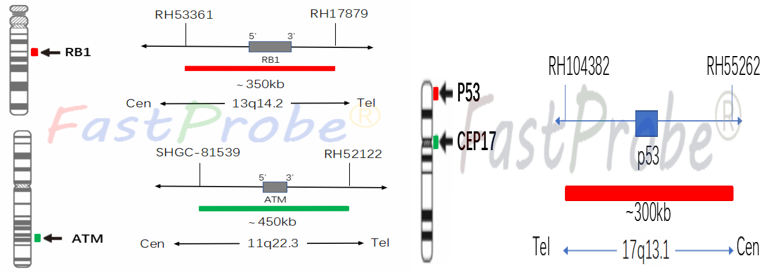
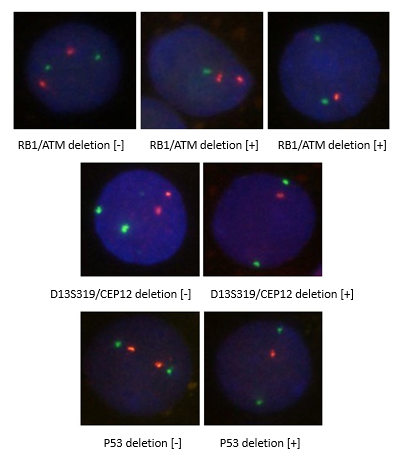
Chromosome and gene abnormality probe detection kit for chronic lymphocytic leukemia
Probe description
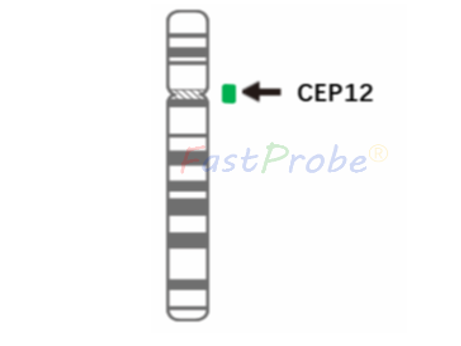
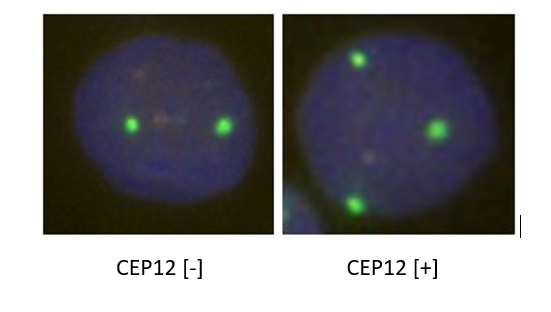
This kit consists of three sets of probes: RB1/ATM, P53/CEP17, and D13S319/CEP12. The probes of RB1, P53 and D13S319 use an orange-red fluorescent label, and ATM, CEP17 and CEP12 probes are labeled with a green fluorescence. The probes are combined with the target sites by in situ hybridization. Under normal conditions (no gene deletion and chromosome abnormalities), two orange-red signals and two green signals are shown under a fluorescence microscope. When there is gene deletion, there will be a lack of green or orange-red signal, and when there is a chromosomal polysomy, the centromere gene probe signal will increase. This method is used to detect gene deletion and chromosome abnormalities, and provide reference for clinical differentiation, prognosis and medication for leukemia patients
Clinical significance
Chromosome abnormalities are found in 80% of patients with chronic lymphocytic leukemia. The most common deletion is in the long arm del 13 (13q14.1) of chromosome 13; the chromosome 12 deletion or trisomy; the short arm of chromosome 17 deletion del(17p). These abnormalities are important for the diagnosis, differential diagnosis, treatment options, and prognosis of chronic lymphocytic leukemia.
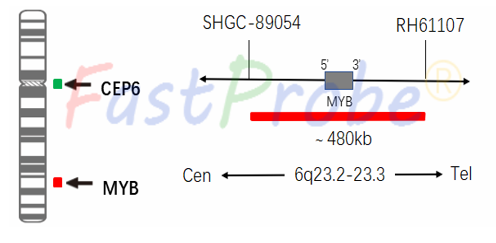
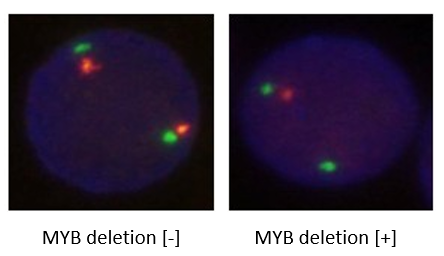
MYB (6q23) gene deletion probe detection kit
Background introduction MYB/CEP6 dual-color probe aims to detect the deletion of the MYB gene at chromosome 6q23.3. The MYB gene encodes a transcript that is expressed primarily in early lymphocytes and bone marrow cells. In different types of lymphoid tumors, 6q aberration is the most common chromosomal variation, and several major deletion regions are on the long arm of chromosome 6. One is 6q23. 3-10% of CLL (chronic lymphocytic leukemia) have chromosome structural aberrations at 6q. The absence of MYB is often accompanied by a secondary change. Because traditional cytogenetic methods are not effective in detecting changes in CLL, the use of fluorescence in situ hybridization (FISH) molecular cytogenetic research method can diagnose and prognose CLL.
Probe description
MYB/CEP6 is a dual-color hybrid probe in which a green fluorescent dye directly labels the CEP6 probe, which specifically acts on chromosome 6 (D6Z1), while an orange-red fluorescent dye directly labels the MYB probe, which specifically acts on the MYB gene at the chromosomal region 6q23.2-23.3.
Clinical significance
Abnormal 6q deletion is the fourth most common abnormality in B-CLL, about 10%. The prognosis of 6q deletion is poor in many tumors including CLL. This probe can detect 2Mb microdeletion regions that cannot be distinguished by karyotyping analysis.
13q14/13q34 (D13S319/LAMP1) gene deletion probe detection kit
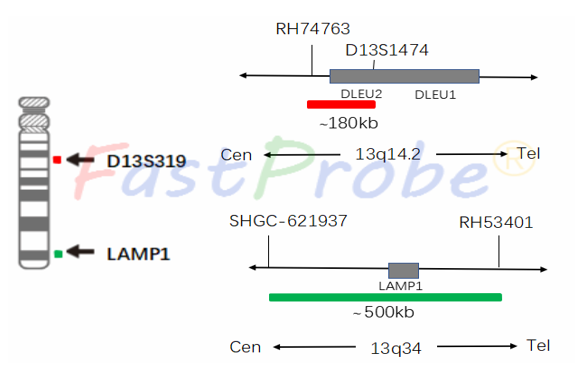
13q14/13q34 dual-color probe is designed to detect the deletion of the long arm end of chromosome 13. The most common aberration in chronic lymphocytic leukemia (CLL) is the deletion of 13q14.2, which contains the D13S319 gene and has a good prognosis for single genetic variant. Combined with further biomarkers, morphological and clinical applications, fluorescence in situ hybridization (FISH) can be an important tool for predicting disease progression and overall survival in CLL patients.
Probe description
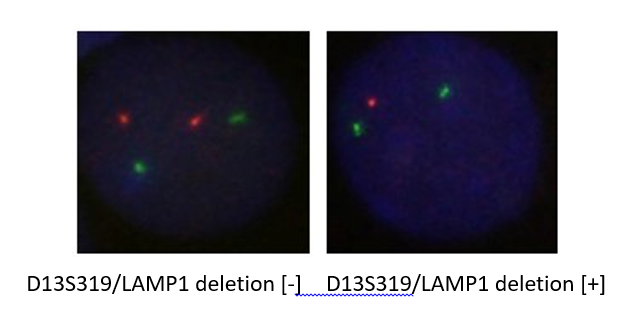
13q14/13q34 is a dual-color hybrid probe. The orange-red fluorescent dye directly labels the D13S319 probe and the probe specifically detects the D13S319 gene at 13q14.2. The green fluorescent dye directly labels the 13q34 probe, which specifically detects LAMP1 gene in the 13q34 region.
Clinical significance
Studies have shown that the deletion of 13q has a negative impact on the survival of patients in event-free survival and overall survival. The most common aberration in CLL is the deletion of 13q14.2, which contains D13S319 gene and has a good prognosis for individual genetic variants. These abnormalities are important for the diagnosis, differential diagnosis, treatment options and prognosis in chronic lymphocytic leukemia.
ATM gene deletion probe detection kit
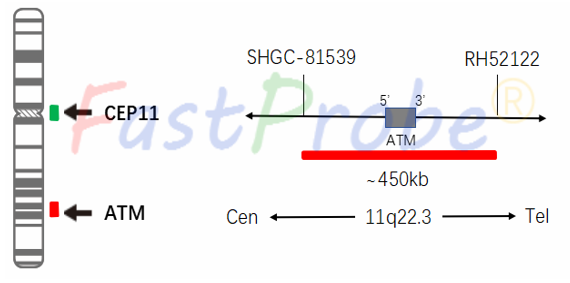
Background introduction ATM gene (ataxia telangiectasia mutated gene) is located at 11q22.3 and encodes a protein kinase involved in cell cycle regulation and activation of TP53 activity.
Probe description
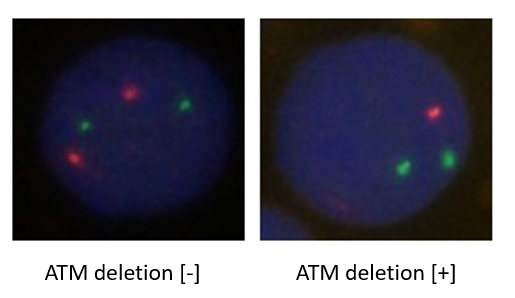
ATM gene deletion kit is a dual-color hybrid probe that directly labels ATM probe with an orange-red fluorescent dye. The probe specifically acts on the ATM gene at the chromosome 11q22.3 region, and the chromosome 11 centromere is directly labeled with a green fluorescent dye.
Clinical significance
ATM gene deletion has a 15-20% incidence in B cell CLL, which is associated with disease invasiveness and poor prognosis. ATM gene deletion is the most common deletion abnormality in CLL, which can guide the selection of treatment options and prognosis evaluation.
Chromosome 12 probe detection kit
Background introduction Trisomy 13 is the most common chromosome number abnormality in chronic lymphocytic leukemia (CLL), with an incidence of 40%-60%. It is often characterized by unique cytogenetic abnormalities. Among other genetic disorders, patients with trisomy 12 are considered to be at low risk.
Probe description
The centromere region of chromosome 12 is directly labeled with a green fluorescent dye.
Clinical significance
Chromosome 12 trisomy is the most common chromosome number abnormality in B-CLL, with an abnormal proportion of more than 55%. The total survival time of trisomy 12 decreases and needs early treatment.