Background introduction Myelodysplastic syndrome (MDS) is a group of heterogeneous diseases that are thought to originate from hematopoietic stem cells and are malignant clonal diseases characterized by bone marrow failure, blood cell dysplasia, and high conversion to acute myeloid leukemia. Studies have shown that 40% to 60% of patients with MDS have non-random chromosomal abnormalities, of which -5/5q-, -7/7q-, +8, 20q- and -Y are the most common.

Dwarka Sector-7, New Delhi-110075
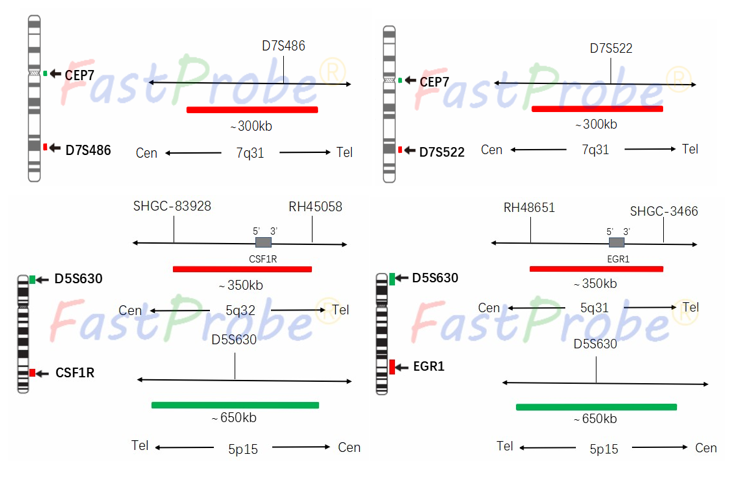
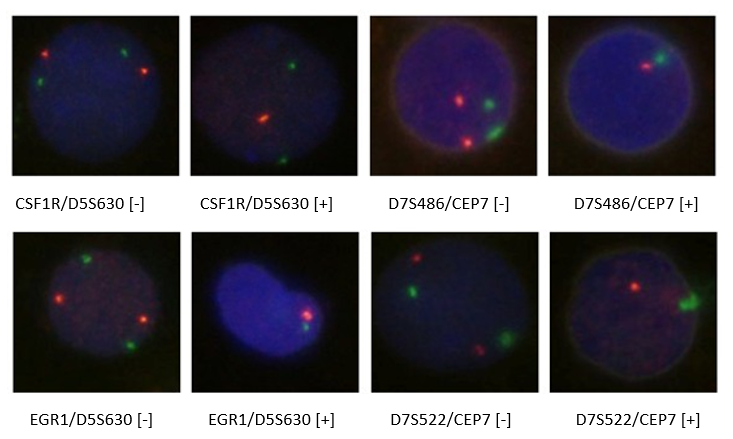
Myelodysplastic syndrome chromosome and gene abnormality detection probe kit
Probe description
This kit uses an orange-red fluorescent dye to label CSF1R, EGR1, D7S486, D7S522, D20S108, CEPY probes, and a green fluorescent dye to label D5S630, CEP7, CEP8 and CEPX probes. The probes bind to the target detection site by in situ hybridization. Under normal conditions (no gene deletion and chromosome abnormality), two orange-red signals and two green signals are shown under a fluorescence microscope. When there is a gene deletion, there will be a lack of green or orange-red signal, and when there is a chromosomal polysomy, the centromere gene probe signal will increase. The detection of gene deletion and chromosome abnormality by FISH method is of great clinical significance for the diagnosis, treatment and prognosis of MDS.
Clinical significance
Some chromosomal abnormalities have specific diagnostic value among the common chromosome abnormalities in MDS patients. Immunosuppressive therapy is effective in some patients with simple +8, 20q- or Y- chromosomes. Karyotyping is also of great value in the classification, treatment and prognosis of MDS. For example, patients with single Y-, 5q- or 20q- chromosomes have better prognosis, while those with complex chromosome abnormalities (≥3 abnormalities) or chromosome 7 abnormalities have worse prognosis, while those with other abnormalities have moderate prognosis. The National Comprehensive Cancer Network – NCCN – guidelines and the Chinese Expert Consensus for the Diagnosis and Treatment of Myelodysplastic Syndrome (2014 Edition) recommend that all patients suspected of having MDS should undergo chromosomes detection, and fluorescence in situ hybridization probes (commonly abnormal sets of probes) are recommended. Abnormalities are important for the diagnosis, treatment, and prognosis of MDS.
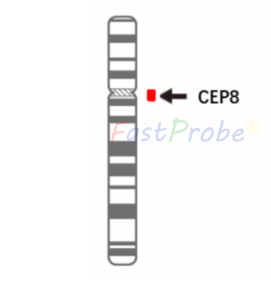
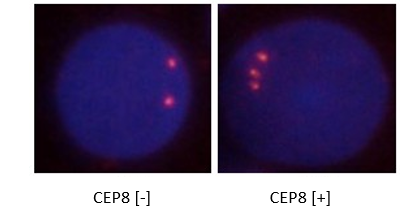
Chromosome 8 detection probe kit
Background introduction Trisomy 8 is the most common cytogenetic abnormality detected in MDS patients in China and Southeast Asia occurring between 25-31% of MDS patients.
Probe description
The centromere region of chromosome 8 is directly labeled with an orange-red fluorescent dye.
Clinical significance
Immunosuppressive therapy is effective in MDS patients with simple +8, with poor prognosis.
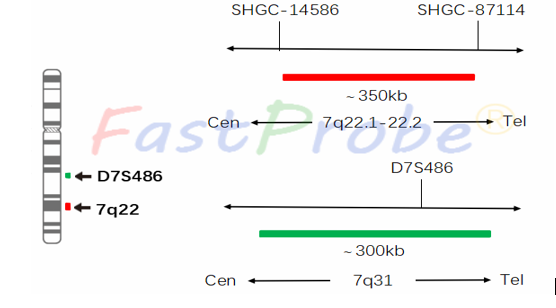
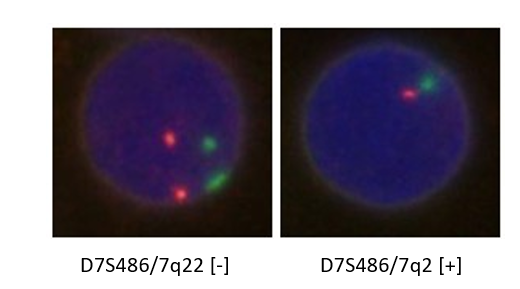
7q chromosome deletion detection probe kit
Background introduction Deletion of the entire chromosome 7 or deletion of the long arm 7q is a recurrent abnormality in MDS, and its incidence is about 15% in patients with MDS.
Probe description
7q chromosome deletion probe labels the 7q22 region with an orange-red dye and the D7S486 region with a green dye.
Clinical significance
Patients with 7q-deficient have a MDS poor prognosis and are prone to infection and conversion to white blood cells (leukocytes).
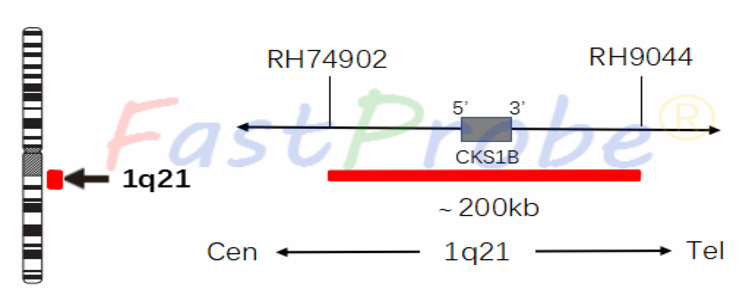
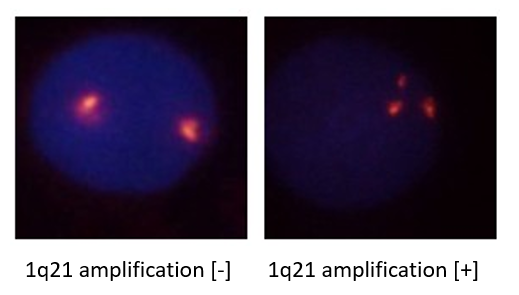
20q chromosome deletion detection probe kit
Background introduction The incidence of 20q deletion is about 4% in MDS patients.
Probe description
20q chromosome deletion probe labels the D20S108 region with an orange-red dye and the 20q13 region with a green dye.
Clinical significance
The prognosis of MDS patients with 20q deficiency is good. Immunosuppressive therapy is effective for MDS patients with 20q deficiency alone.